Soil Health & Regenerative Agriculture
How the ground beneath us shapes the food we eat and the climate we live in — and what one person can do about it.
A tablespoon of healthy soil contains more living organisms than there are people on Earth. That is the quiet fact behind everything you eat: every bite of food begins as a transaction between plant roots and the microscopic life of the ground, and the quality of that transaction decides the quality of the food on your plate. Conventional agriculture has spent a century treating soil as an inert medium to be dosed with chemicals, and the results are now visible: topsoil erosion, collapsing biodiversity, and food that is measurably less nutritious than it was a generation ago.
Regenerative agriculture is the turn back — a way of farming that rebuilds the soil with every harvest instead of spending it down. It is satvic living practiced at the largest scale there is: the ground itself.
The tradition never separated the plate from the earth: food is the meeting point where prana — the life force the classical texts located in living things — passes from soil to seed to body. Soil treated as inert dirt to be dosed yields food that is emptier in every sense; soil tended as a living community yields food that carries the life. The science of bionutrient density is the modern measurement of exactly this ancient claim.
What Regenerative Actually Means
Regenerative farming is defined by outcomes, not a label: the soil's organic matter increases, water infiltrates instead of running off, and the land captures more carbon than it releases. The practices are old and proven — no-till planting that leaves the soil structure intact, cover crops that keep the ground living between harvests, compost instead of synthetic fertilizer, and livestock grazed in tight rotations that mimic the great herds, whose hooves and dung feed the soil biology. The same land that industrial farming exhausts can, managed regeneratively, pull measurable amounts of carbon out of the atmosphere and back into the ground — which is why the movement has drawn attention far beyond organic circles.
It is worth being precise about the difference between the labels. "Organic" is a certification of what is kept out — synthetic pesticides, artificial fertilizers, routine antibiotics. "Regenerative" is a standard of what is built up — organic matter, water retention, biodiversity, carbon. The two overlap, but they are not the same question, and the difference matters when you read a label.
A farm can be certified organic and still till its soil bare every spring; it can be unlabeled and still be rebuilding its ground. The honest question to ask any producer is not what badge they carry but what the soil is doing under their management: increasing, holding, and supporting life, or eroding, compacting, and being dosed.
The Research Backbone
The longest-running comparison in American agricultural science is the Rodale Institute's farming systems trial, running since 1981: organic and regenerative systems match or exceed conventional yields, use dramatically less energy, and build soil while conventional plots deplete it. The Rodale Institute publishes this work openly — it is the place to start if you want the numbers rather than the slogans. For the grassland half of the story, the Savory Institute has spent decades refining and teaching holistic planned grazing, the management method that regenerates drylands at continental scale. And Kiss the Ground is the movement's most effective translator: its film and education platform have brought the soil story to audiences that would never read a farming trial, all with the same core message — healthy soil is the largest, cheapest climate lever we have.
What This Has to Do With Your Plate
The chain from soil to plate is direct. Plants take up what the soil biology makes available; a plant grown in mineral-rich, microbe-dense soil is more nutritious than the same variety grown in exhausted ground. When you choose regeneratively grown food you are not buying a luxury — you are buying the difference between food that feeds you and food that merely fills you. Look for farms and brands that say how they farm, not just what they sell: "regenerative organic," "carbon farming," and farm-direct suppliers that publish their practices are the honest signals.
What One Person Can Do
You do not need to own farmland to participate. Three practical moves cover most of it.
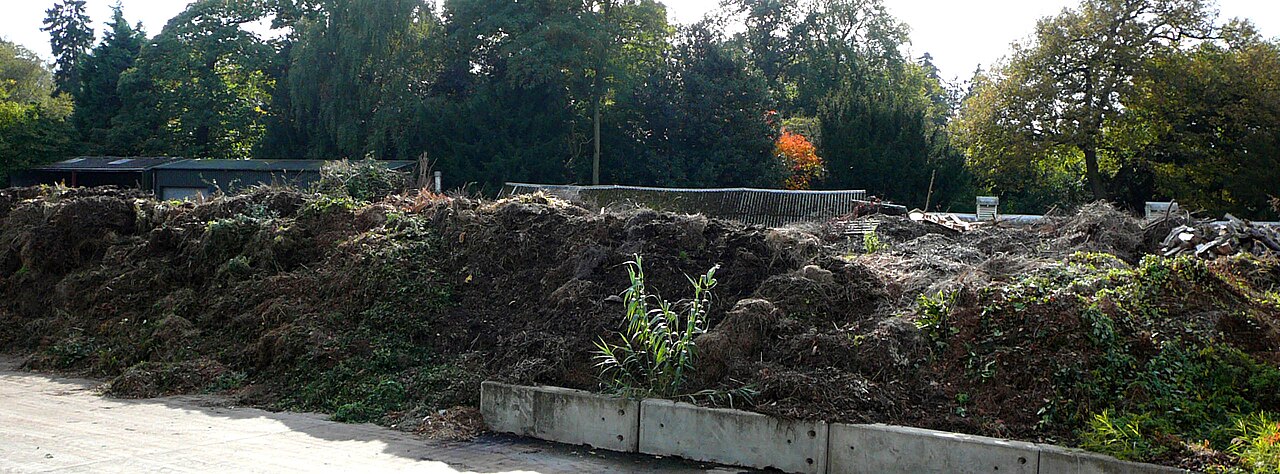
- Compost: a kitchen bin feeding a small compost pile or a municipal pickup keeps your organic waste cycling into soil instead of a landfill, where food scraps rot anaerobically and release methane. It is the household-scale version of the satvic home principle — close the loop where you live.
- Buy regeneratively when you can, even one item a week from a farm that names its practices; demand is what scales the system.
- Grow something, even a pot of herbs on a windowsill — the act of putting a seed in soil changes how you read every other claim about food for the rest of your life.
And the instinct behind it — designing living systems that feed themselves — has a name and a history: the permaculture movement, from its 1978 origins to the food forests it now inspires.
A fourth lever is political, and it costs a phone call: most countries' agricultural subsidies still reward volume and chemical input, not soil health. Asking a local representative why public money funds practices that deplete the ground — and what the regenerative transition would look like in your region — is a two-minute act that compounds exactly like a compost heap: slowly, then all at once.
Integration
This season, start the compost — a countertop bin and a small outdoor pile is the entire kit. This month, find one local farm or one brand that farms regeneratively and buy from it once. Soil does its work slowly, which is exactly why it rewards patience: the ground that feeds you was built over millennia, and every compost heap and cover-cropped field is a small payment on a very old debt.
Audited Baselines
Trustworthy, clinical tools and platforms audited to support an intentional practice.