Permaculture: Designing Life Like an Ecosystem
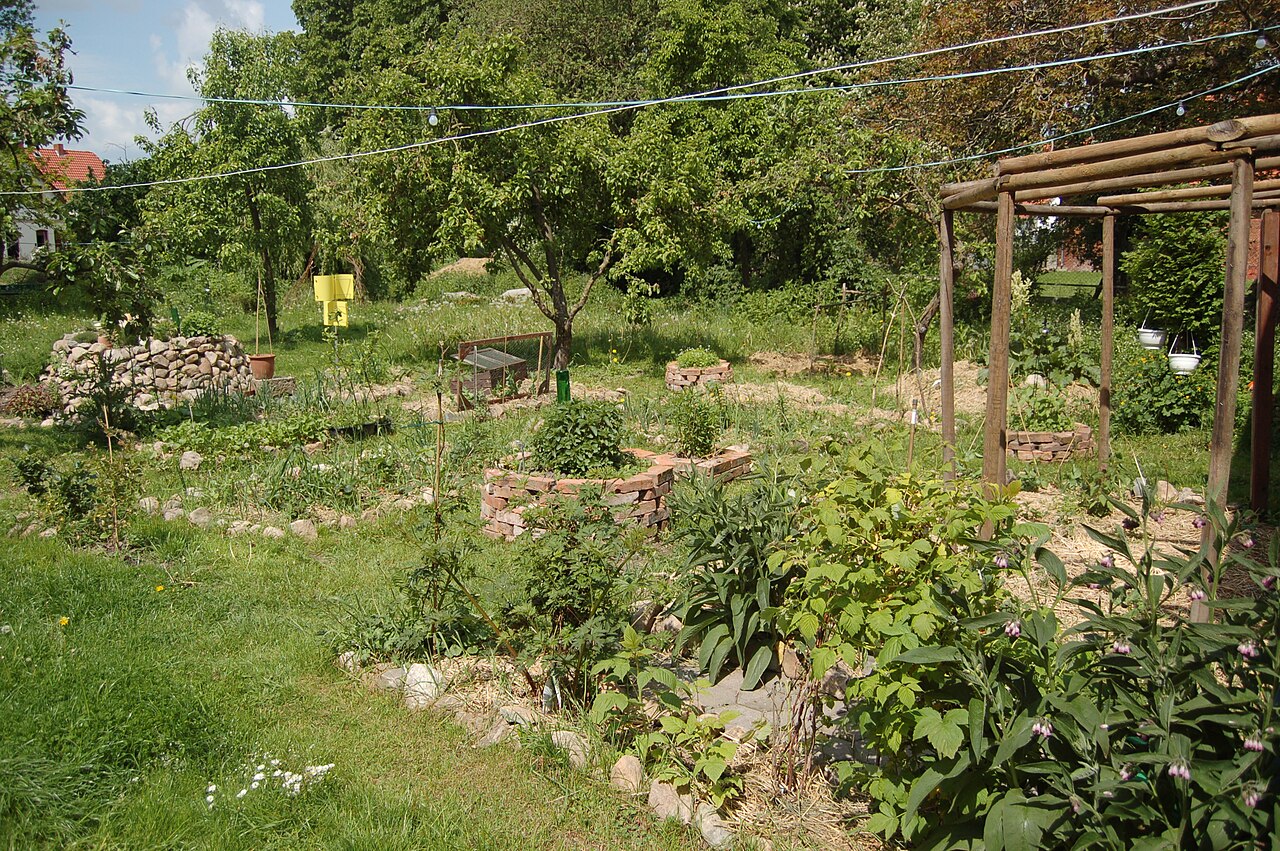
Bill Mollison and David Holmgren coined 'permaculture' in 1978. The design philosophy they launched now spans the globe — food forests, no-dig beds, and ecosystem thinking. Here is the history, the principles, and an honest word on where animals fit in a satvic design.
Two Australians in the late 1970s watched industrial agriculture strip the topsoil, poison the waterways, and drain the rural communities around them, and they asked a question nobody in farming was asking: what would a farm look like if it imitated a forest? The answer they published in 1978 became a movement that now spans every continent — and its central idea, that the most productive systems on earth are designed, not extracted, is more relevant to a conscious life than ever.
Two Australians, One Book
Bill Mollison and David Holmgren coined the word "permaculture" in 1978 with their book Permaculture One. The name began as "permanent agriculture" and quickly grew into "permanent culture" — because a way of growing food implies a way of living. Their ethics are three, and they are the whole philosophy in miniature: care for the earth, care for people, and fair share — setting limits to consumption and sharing the surplus.
The founding insight was ecological: natural ecosystems produce abundantly with no inputs, no waste, and no fertilizer. A well-designed human system could do the same by arranging plants, water, soil, and buildings the way a forest arranges itself.
Design, Not Doctrine
Permaculture is a design method, not a fixed set of rules. Holmgren distilled it into twelve principles — observe and interact; catch and store energy; obtain a yield; use and value diversity; integrate rather than segregate — which read less like commandments and more like habits of attention. Two tools carry the practice: zones (place the things you visit daily nearest the door) and sectors (map where sun, wind, and water enter your site).
The emblem of the movement is the food forest — a layered polyculture of fruit trees, berry shrubs, herbs, and ground covers that feeds people year after year with nothing but sunlight and care. It is, without exaggeration, nature's pantry, and it is entirely plant-based.
From the Farm to the Balcony
Permaculture scaled down as gracefully as it scales up. A balcony, a window box, or a single no-dig bed is a legitimate permaculture project: observe the light, catch the rainwater, plant perennials, feed the soil. The movement's practical gifts — no-dig gardening, composting, seed saving, and the deep soil building covered in the regenerative agriculture guide — are available at every size, and its literature on understanding food quality connects growing to eating in one continuous loop.
The Honest Word
Two caveats, stated plainly. First, permaculture's claims outrun its evidence: its successes are documented in projects and photographs more than in controlled trials, certification is decentralized and sometimes commercial, and the twelve principles are experience-based heuristics, not laws of nature. Treat them as design prompts, verify results on your own soil, and take any course's sales pitch with the same skepticism you would apply anywhere.
Second, the question of animals. Classic permaculture literature often celebrates livestock integration — rotational grazing, animal labour, and animal products as closed-loop "yields" — and some of that literature is deeply influential. The satvic reading is not that animals have no place on a farm; it is that animals are partners, not products. A working animal that is fed, sheltered, and cared for in fair exchange for its labour is a living relationship, not an exploit — and a satvic design can absolutely include that. What falls away is the treatment of animals as harvestable yield: breeding for slaughter, dairying on a production line, and the language that turns a life into an output. Food forests, no-dig beds, compost, and seed saving remain complete systems on their own, and where animals do work the land, the satvic version is a partnership with them, not a use of them. Take the ecological design and keep the method's core — you have lost nothing by dropping the parts that treat other beings as inputs.
Integration
Start smaller than you think: build one no-dig bed this season — cardboard, compost, mulch, and a handful of perennial herbs and greens — and let it feed you before you feed it. Begin a compost pile and a seed-saving habit alongside it, because soil and seeds are the two things the movement protects that nothing else can replace. If the design logic grabs you, take the free principles overview before any paid course. One bed, one season, one observation per visit — that is permaculture's entire curriculum, and it starts this afternoon.
Audited Baselines
Trustworthy, clinical tools and platforms audited to support an intentional practice.
Permaculture Principles
David Holmgren's twelve design principles, each explained with practical examples.
Permaculture Research Institute
News, courses, and a global directory of permaculture projects and teachers.
The Permaculture Association
The UK's membership body for practitioners, projects, and courses.