The Slow Food Movement: The Revolt Against Fast
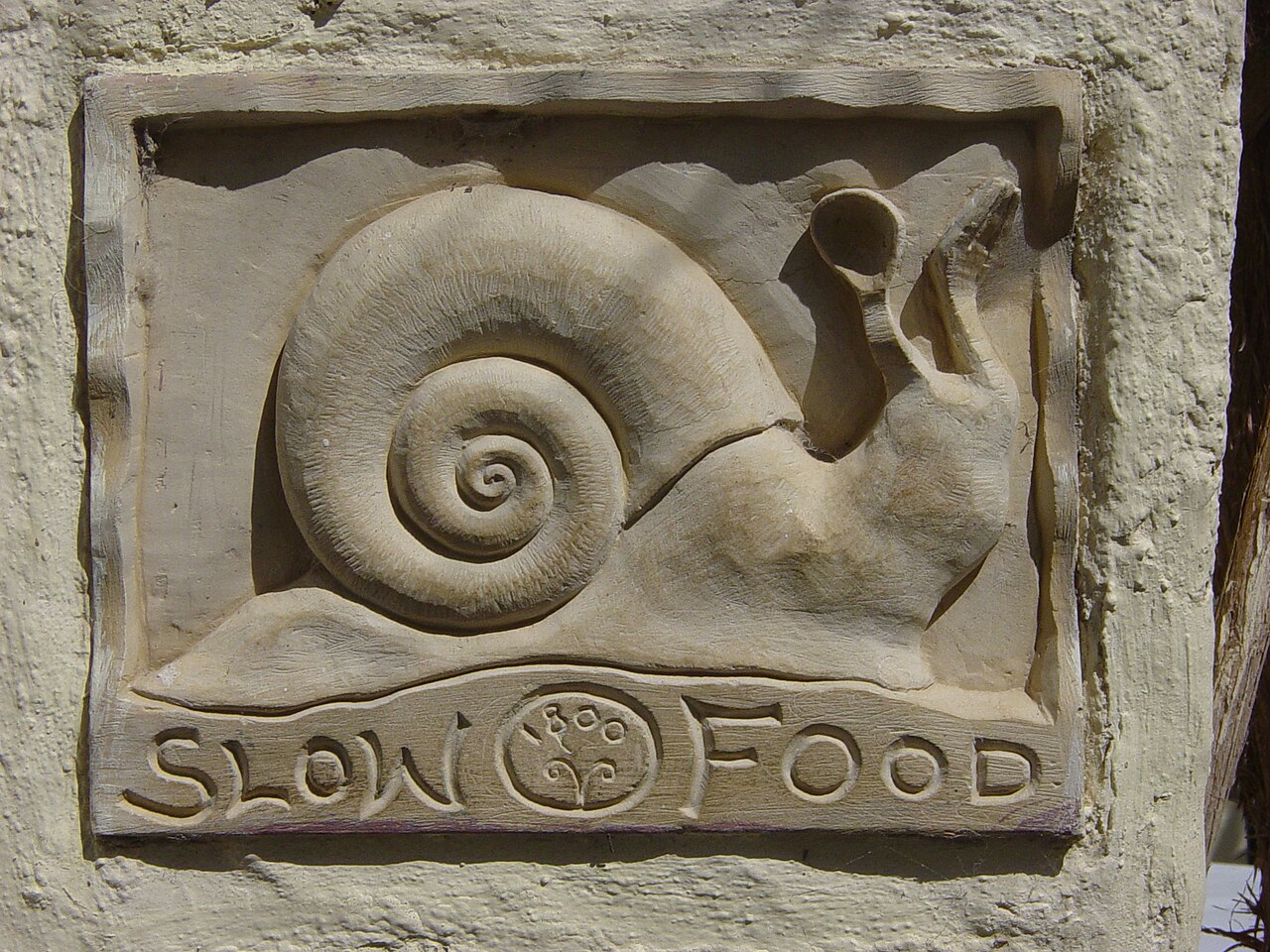
Born in 1986 when a journalist watched a McDonald's open near the Spanish Steps, the Slow Food movement grew into a network in more than 150 countries. Its history, its projects — and an honest note on where it sits with a satvic, non-exploitative diet.
In 1986, a McDonald's opened near the Spanish Steps in Rome, and an Italian journalist named Carlo Petrini got angry enough to start a movement. Three years later the Slow Food manifesto was signed in Paris, launching the international movement; today it counts chapters in more than 150 countries, and its name has become a synonym for a whole philosophy of living. This is the story of that revolt — and an honest look at where Slow Food's heritage overlaps with animal farming and how a satvic, non-exploitative diet holds the movement's best instincts without its compromises.
Born Against Fast
The provocation was simple: a global chain arriving in the historic heart of Rome, serving the same food everywhere, at the same speed. Petrini's answer was not "eat more", but "eat with attention" — food that is good, clean, and fair: good to taste, clean for the planet, fair to the people who produce it. Against the logic of industrial scale, he proposed the logic of place: a meal that belongs to a region, a season, and a community.
The manifesto committed the movement to defending regional cuisine, small producers, and agricultural biodiversity — and to treating eating as a cultural act rather than a refuelling stop.
The Projects
Slow Food is one of the few movements that built its philosophy into institutions:
- Convivia — more than a thousand local chapters worldwide where members cook, taste, and campaign together.
- The Ark of Taste — a living catalogue of endangered foods, from heritage grains and heirloom vegetables to forgotten fruit varieties, many of them plant-based treasures on the edge of extinction.
- Presidia — projects that support small producers keeping traditional methods alive.
- Terra Madre — the gathering of food communities from every continent.
- School and taste education — teaching children to recognize real food before the industry teaches them to want the alternative.
The movement's most valuable plant-based work is the quiet one: cataloguing and protecting the vegetable, grain, and legume diversity that industrial agriculture is erasing — the very foods the food quality guide tells you to seek out.
Beyond Food: The Slow Philosophy
Slow Food's success spawned an entire family: slow cities (Cittaslow), slow fashion, slow tourism, slow work — the "slow living" idea that a deliberate rhythm is not laziness but a design choice. That philosophy is the satvic approach to time: cooking a meal slowly and simply, walking instead of scrolling, letting one thing finish before the next begins.
The Honest Word
Two tensions need naming. The first is accessibility: artisan food and heritage ingredients can carry artisan prices, and critics are right that "slow" can become a status symbol. The answer is that slowness is a practice, not a price tag — a slow bowl of lentils costs less than a fast burger.
The second is the question of animals. Slow Food's heritage work includes traditional animal products — aged cheeses, cured meats, dairy — celebrated as cultural treasures, and some of its most famous Presidia are animal-based. The movement is not a vegan organisation, and it does not claim to be. The satvic reading is not a rejection of the tradition but an extension of its own logic: attention, locality, and biodiversity applied to the plant world — heritage legumes instead of heritage cheese, regional grains instead of regional salami. The Ark of Taste's plant treasures need defending every bit as urgently as its animal ones, and that defence requires no compromise with an ethic that treats animals as partners rather than products. A food tradition is a conversation you can rewrite; the satvic version of Slow Food is simply the version where nothing is exploited.
Integration
Do one concrete thing this week: open the Ark of Taste and find one plant food from your own region — a grain, a bean, a fruit — that you have never eaten, then cook it slowly. If you have a garden, grow one heritage variety next season and save its seed; if you do not, buy from a farm that grows heirlooms and ask which seed they came from. That single act joins the movement's oldest ambition to the conviction at the heart of the satvic diet: attention to food is attention to life, and the most radical thing you can eat is the thing that took time — grown with care, cooked slowly, and shared without exploiting anyone, human or animal, along the way.
Audited Baselines
Trustworthy, clinical tools and platforms audited to support an intentional practice.
Slow Food International
The movement's home: local chapters, campaigns, and events in more than 150 countries.
Slow Food Foundation for Biodiversity
The Ark of Taste catalogue of endangered foods and the Presidia projects that protect them.
Cittaslow
The 'slow cities' network that carries the philosophy into town planning.