The Vipassana Movement: Ten Silent Days, Ninety Countries
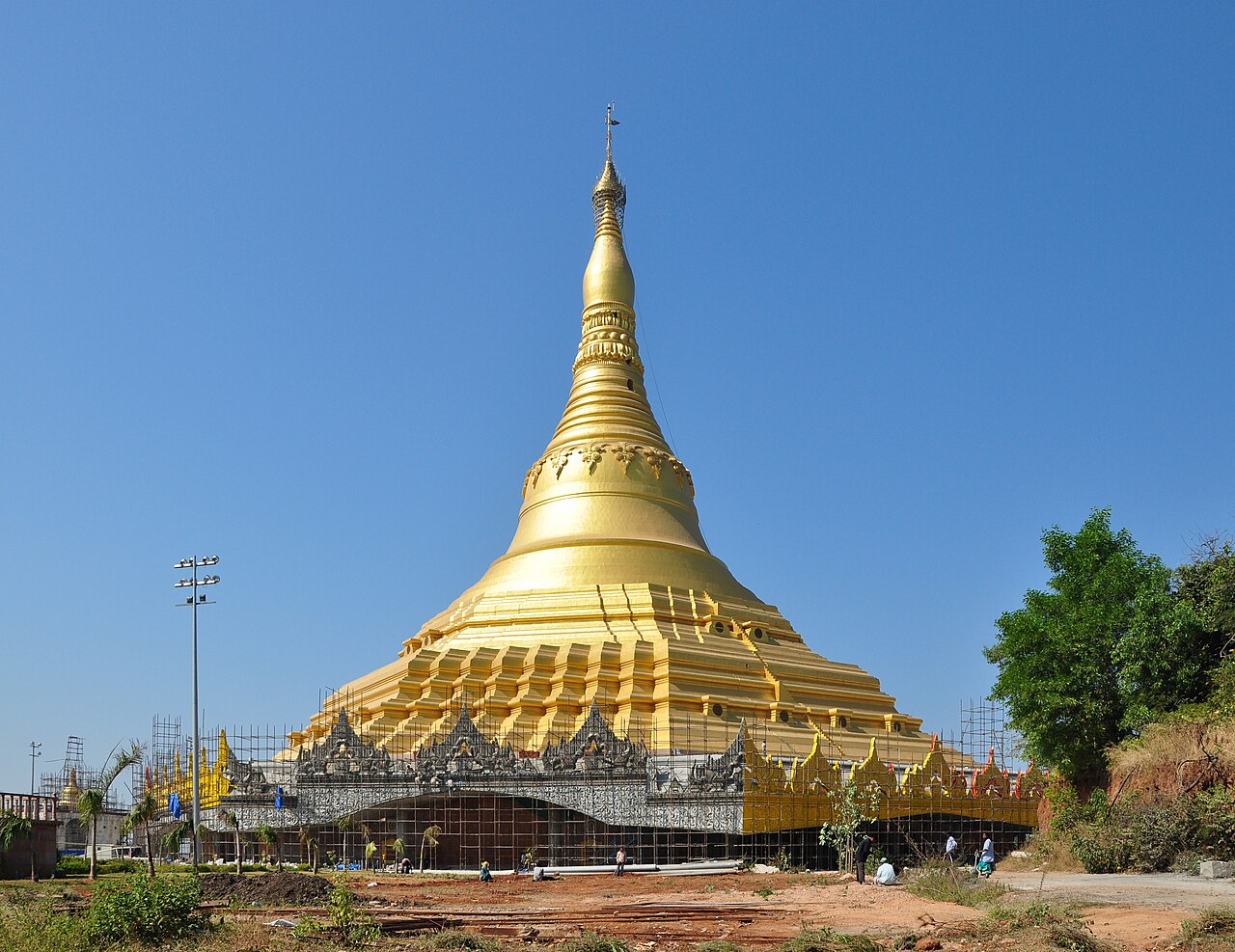
The global network of Vipassana meditation centers founded by S.N. Goenka runs donation-funded ten-day silent courses in more than ninety countries. Here is the history, the method, and the honest assessment — including what the 2024 investigation changed.
The acceptance email arrives on a Tuesday morning and asks for something most people have never done: ten days of complete silence, no phone, no books, no eye contact, no writing, waking at four in the morning, and ten hours of sitting a day. A hundred and fifty strangers will share a hall and never speak to one another. The price is zero.
Every year, hundreds of thousands of people say yes to this — the ten-day Vipassana course, the signature program of the meditation movement that S.N. Goenka built. This is its story, its method, and the honest reassessment the last few years forced upon it.
A Technique, a Teacher, a Network
The technique is old — 2,500 years old, the method the Buddha himself described. But the movement is recent. Sayagyi U Ba Khin kept the practice alive in Burma in the mid-twentieth century, and passed it to S.N. Goenka, a successful Indian businessman who learned it in 1955 after a decade of migraines that doctors could not cure. Goenka began teaching in India in 1969, first in ten-day courses, and then built the infrastructure that carried it worldwide: a uniform course format, teacher guidance delivered by recording, and a network of centers coordinated through dhamma.org that today spans more than ninety countries.
What makes the network unusual is its economics. Courses are entirely donation-funded — past students pay for the next generation, nobody is turned away for lack of money, and the teachers receive nothing. The movement runs on volunteers.
The economics are worth sitting with, because they embody a principle at the heart of the tradition: dana — the giving that asks nothing in return. The classical teaching holds that the most precious things cannot be bought, and that knowledge shared freely grows in the giving. A movement that runs on past students paying forward for strangers is the practical proof of that idea — and it is why the satvic view of it, for all the honest caveats below, keeps a genuine respect for what the network has built.
The Ten Days
The course has a precise anatomy. The first three days are spent on anapana — breath awareness alone. On day four the technique shifts to vipassana proper: sweeping attention through the body, observing sensations with equanimity rather than reacting to them. The theory, laid out in William Hart's classic The Art of Living, is that equanimous observation allows deeply stored patterns — sankharas — to surface and dissolve.
The discipline is the method: noble silence, a fixed schedule, group sittings. Students often describe the fourth day as the turning point, and the tenth as the hardest to leave.
The Scale and the Standard
The movement's reach is enormous. Its courses run in dozens of countries every month, its format is identical everywhere, and its alumni include businesspeople and prisoners in Indian jails. For many people the ten-day course is the single most demanding and most valuable practice they have ever done — which is exactly why the meditation guide has long pointed to it as the gold standard of intensive practice.
The Honest Word
In January 2024, the Financial Times published "Untold: The Retreat", a major investigation into the Goenka network. It documented cases of psychological distress and psychiatric breakdowns among vulnerable participants, suicides, a lack of trained mental-health support inside courses, and an institutional culture critics describe as authoritarian. The movement disputes parts of the reporting, and many students report transformative experiences — both things can be true at once.
Intensive silent retreat is not therapy, and it is not for everyone. Anyone with a history of mental illness, trauma, or psychiatric medication should consult a health professional before registering, and should treat the movement's screening with the caution a volunteer-run system deserves. Start short — a one-day or three-day course — before committing to ten days, and know that leaving a course is always an acceptable option. The technique has genuine value and a remarkable institutional honesty about money; the delivery system has real risks that a careful reader should weigh in advance.
Integration
If the ten-day format tempts you, do three things first: read the FT investigation so you enter with open eyes, speak with your doctor if you have any mental-health history, and attend a local Vipassana group sitting or a short course before registering for the long one. The practice itself — sitting with sensation, without reacting — is available in small doses long before you ever sign up for silence. That is how you test a movement like this: not with faith, but with one honest session at a time.
Audited Baselines
Trustworthy, clinical tools and platforms audited to support an intentional practice.
Dhamma.org
The official network of Goenka-style Vipassana centers and courses, in more than ninety countries.
Vipassana Research Institute
The movement's research arm, behind the modern edition of the Pali texts.
Pariyatti
The movement's publishing house — source of the classic 'The Art of Living' and free Dhamma talks.