Lifelong Learning & Free Knowledge
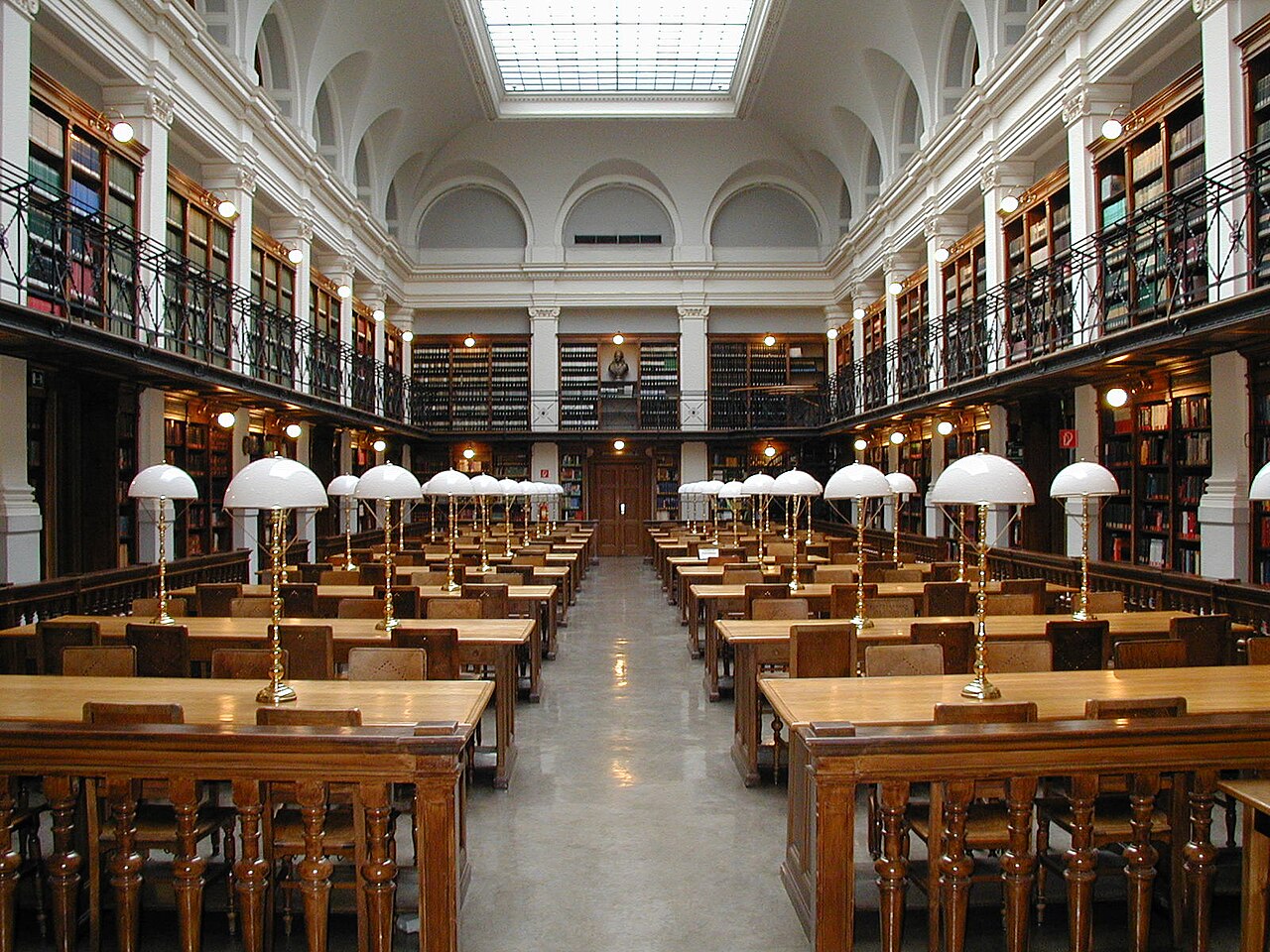
Access to education without corporate capture — the free, open, and trustworthy libraries of human knowledge, and how to learn deliberately for life.
For most of human history, knowledge was the property of the few — locked in monasteries, universities, and expensive books, available only through institutions that controlled the gates. The last thirty years quietly reversed this, and the reversal is one of the great unacknowledged gifts of our time: the accumulated learning of humanity is now free to anyone with an internet connection. Lifelong learning is the practice of taking that gift seriously — not as "education" that ends with a diploma, but as a permanent orientation of the mind. Honest learning is fundamentally about knowledge honestly pursued, and free knowledge is its infrastructure: learning that cannot be bought, gated, or taken away by any corporation.
This is svadhyaya — the study of truth, the observance the yogic tradition placed among the foundations of a disciplined life — scaled to the whole of human knowledge. The tradition never treated learning as a phase; it treated it as a lifelong fire, fed daily and shared freely, the way the old oral lineages passed knowledge on without gates. The modern libraries below are that same giving, at planetary scale.
The Great Free Libraries
The foundations of free knowledge are astonishingly good, and most people use a fraction of them. Wikipedia is the reference standard for what voluntary cooperation can build: the largest encyclopedia in human history, written and continuously fact-checked by volunteers, with every edit logged and every source expected to be cited — an open process that is, in practice, more transparent than most encyclopedias ever were. The Internet Archive is the preservation project of the digital age: millions of free books, films, audio recordings, and a deep archive of the web itself, so that knowledge does not vanish when its host site does. Between the two, you hold a working library of everything.
University-Level Education, Free
The second layer is structured learning. OpenStax publishes free, peer-reviewed, openly licensed college textbooks — the same quality as the commercial textbooks used in universities, available for nothing, and used by hundreds of thousands of students. MIT OpenCourseWare goes further: complete course materials — lecture videos, assignments, exams — from one of the world's leading technical universities, released freely for the entire curriculum, so that a self-taught student in a small town can study exactly what an MIT student studies. And Khan Academy solved the other half of learning — the practice side — with free, mastery-based exercises that meet you at your level and let you practice until a subject is actually learned rather than merely covered. Together these three make a complete, free university with no application and no tuition.
Learning Deliberately, Not Casually
Free knowledge solves access, but not attention — and that is the second battle. The same internet that delivers Wikipedia also delivers the most sophisticated distraction machinery ever built, and algorithmic feeds are optimized to keep you in shallow, passive consumption. Lifelong learning therefore requires treating learning as a scheduled practice, not a mood. Set a recurring block — even twenty minutes a day — for a single subject you have chosen to study.
Use the focus practices that work: one topic at a time, notes in your own words, and the deliberate replacement of scrolling with reading. The satvic daily routine applies to the mind as much as the home: a small, regular, unglamorous practice that compounds over years outperforms the occasional grand course every time.
The Open-Community Ethic
Free knowledge is not only free to use; it is a commons maintained by its users, and participating in the maintenance is an act of good citizenship in action. You can fix a citation on Wikipedia, transcribe an audiobook for the Internet Archive, review an OpenStax chapter, or translate course material into a language that lacks it. These are small acts with outsized returns — a single good edit on Wikipedia is read by millions. The model works precisely because ordinary people contribute their expertise for free, and it demonstrates, at global scale, that knowledge shared is knowledge that grows. Open-source software runs on the same ethic, and both prove the same point: the commons is not a fantasy, it is the oldest working system for knowledge there is.
Integration
Start one deliberate learning project this week. Choose a subject you have wanted to understand for years, find the free curriculum for it — an OpenStax textbook, an MIT OpenCourseWare course, a Khan Academy path — and schedule twenty minutes daily for the next month. Then join the commons once: fix one thing you find wrong in the knowledge you use, whether that is a Wikipedia article or a caption in the archive. Free knowledge is the rare gift that grows the more it is used; the only thing it asks in return is that you actually use it.
Audited Baselines
Trustworthy, clinical tools and platforms audited to support an intentional practice.
Wikipedia
The free encyclopedia built by volunteers, written and edited by people worldwide.
Internet Archive
A digital library of millions of free books, films, audio, and archived web pages.
OpenStax
Free, peer-reviewed, openly licensed college textbooks.
Khan Academy
Free courses and practice for math, science, and more, at your own pace.
MIT OpenCourseWare
Complete course materials from MIT, freely available online.